If you have invested in Bitcoin, Ethereum or any other token, there is one word you will hear over and over once the tax return season opens: FIFO.
At colvence we have processed thousands of transactions in which the FIFO method plays the leading role. Understanding it is not merely an accounting matter; it is the key to knowing how much tax you will actually pay.
What is the FIFO method?
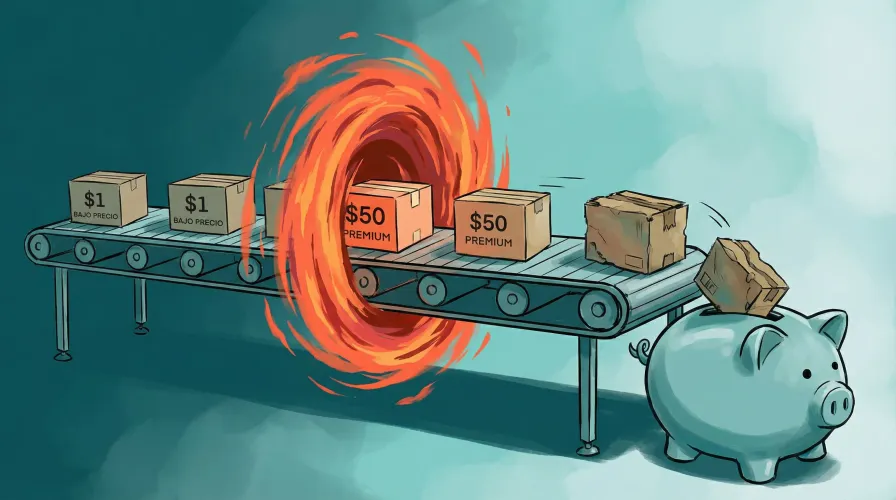
FIFO stands for First-In, First-Out. For the Spanish tax agency, cryptocurrencies are “homogeneous assets”. This means that if you bought 1 BTC in 2020 and another one in 2023, the law assumes that when you decide to sell part of your holding you are selling the first one you bought.
Why does the Spanish tax agency choose FIFO?
The AEAT applies this criterion to bring order to volatility. Because you are deemed to sell the oldest units first, the taxable result is usually higher (prices years ago tended to be lower), which translates into a larger capital gain.
A worked example: the impact on your pocket
Picture the following activity of a private investor:
- January 2021: you buy 0.5 BTC at a price of €20,000 (cost: €10,000).
- June 2024: you buy 0.5 BTC at a price of €50,000 (cost: €25,000).
- December 2025: you sell 0.6 BTC at a price of €60,000 (proceeds: €36,000).
Calculation under FIFO:
- You sell the 0.5 BTC from January 2021 (cost €10,000).
- You sell 0.1 BTC from June 2024 (proportional cost: €5,000).
- Total acquisition cost: €15,000.
- Taxable gain: €36,000 - €15,000 = €21,000.
Had you been able to pick the 2024 BTC (the LIFO method), your gain would have been far smaller, but in Spain that option is not available to you.
What other options exist (and why they do not work in Spain)?
Although alternatives exist in other countries, in Spain the room for manoeuvre is narrow:
- LIFO (Last-In, First-Out): selling the most recently bought units. It could reduce tax in a bull market, but the AEAT rejects it for homogeneous assets.
- HIFO (Highest-In, First-Out): selling the most expensive units first. Ideal for optimising, but not permitted.
- Weighted average price: common for other assets, yet the Spanish tax agency has been clear in its binding rulings: for crypto, FIFO rules.
Expert note: there is a recent judgment from the High Court of Justice of the Basque Country, the TSJPV (February 2025), that opens the debate on whether FIFO is the correct method for crypto. Even so, to avoid penalties from the national AEAT, at colvence we keep applying FIFO strictly until there is an official change in the rules.

Víctor Lázaro
Tax adviser, colvence.com